
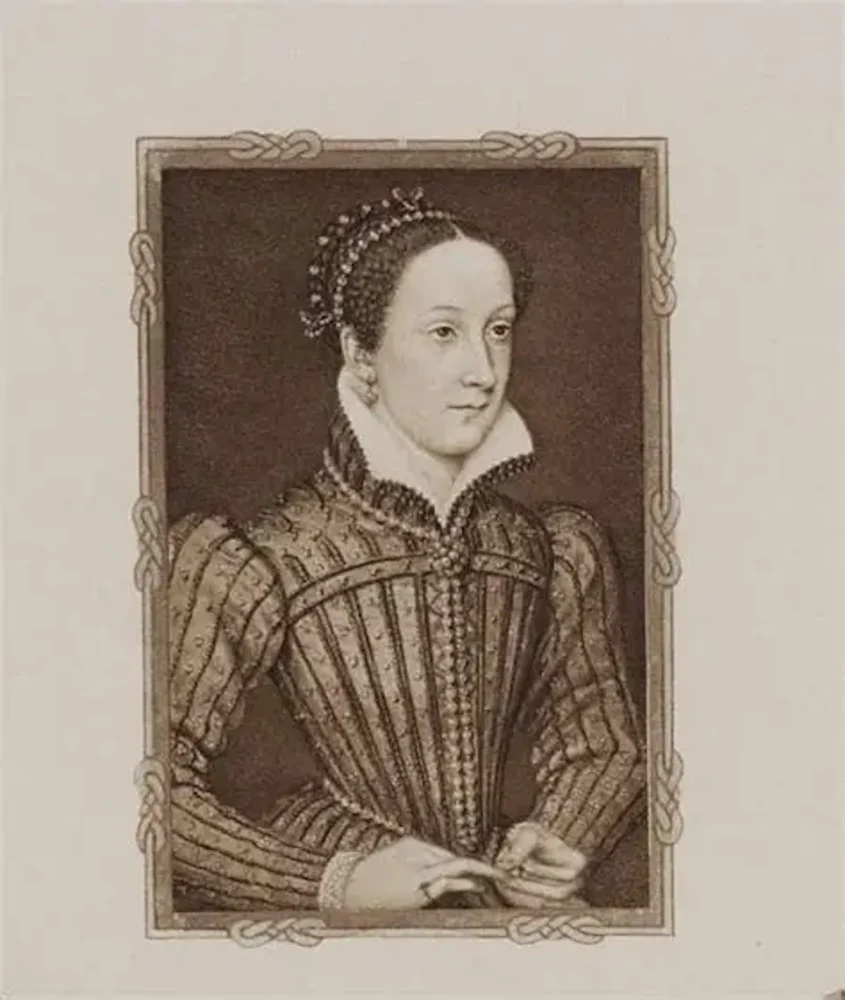
As promised, a little information about Mary, Queen of Scots and her stay (imprisonment) at Bolton Castle. She arrived at Bolton Castle in July 1568, weary from flight and already feeling the tightening grip of captivity as only weeks earlier, she had escaped Scotland after her defeat at the Battle of Langside, crossing the Solway and landing at Workington on 16 May. She came seeking protection from her cousin Elizabeth I, but the welcome quickly cooled and after a short, uneasy stay at Carlisle Castle, Elizabeth’s advisors judged the border too volatile, and Mary was moved south into the “safety” of Wensleydale — a decision shaped as much by politics as by concern.
Bolton Castle became her home for six months, which offered both security and confinement. She lived in the Scrope family’s apartments with a surprisingly large household around her, keeping some of the rhythms of royal life even in captivity. Thankfully this was still the gentler phase of her imprisonment: she was allowed to walk the grounds, to hunt, and to look out across the wide dale that must have felt both beautiful and unreachable. It’s easy to imagine her standing at one of the high windows, looking out over Wensleydale and across to Penhill and wondering what future waited beyond those walls.
The long limestone terrace that runs from Leyburn towards Bolton Castle carries the name The Shawl, and local tradition gives it a romantic twist. People say Mary Queen of Scots dropped her shawl snagging it on a bramble bush somewhere along the path while fleeing the castle — a story full of drama perhaps. But history tells a different story. Mary never escaped from Bolton, and she never ran across this ridge. She was moved there under guard from Carlisle. The name of the path comes not from an event but from a legend, a tale woven into the landscape by generations who preferred the poetry of a queen in distress to the political caution of her real journey. And perhaps that’s why the name has stayed: because The Shawl feels like a place where such a moment could have happened.
This I had no idea about, ever since I was a little girl the story of The Shawl has perpetuated, wasn’t sure which way she was fleeing but maybe that’s quite understandable as it never happened. Mary was escorted to Carlisle Castle and then on leaving escorted to Tutbury in January 1569.
Do come and stay in one our beautiful Country Hideaways holiday cottages and visit Bolton Castle in Wensleydale and find out more about the history of the castle. Call me, Nadine, or my daughter Joanne, on 01969 663559 or, of course, do book online if you prefer.
As always we look forward to hearing from you quite soon!
Written By Nadine Bell


)